
In humanitarian and development contexts, localization has become a cornerstone principle for improving the effectiveness, relevance, and sustainability of interventions. At its core, localization is about shifting decision-making, resources, and implementation closer to the communities affected by crises, ensuring that local and national actors—alongside community members themselves—are meaningfully involved in every stage of a project. It recognizes that those who live and work within a context have unique insights into its challenges, needs, and opportunities, and that their engagement leads to more accountable, context-sensitive, and impactful programming.
At TRUST Consultancy & Development, localization is not just a concept; it is one of our core values. We strive to embed it into our projects from inception to completion, creating processes that amplify local perspectives and build genuine partnerships with the communities we serve.
From Project Inception to Community Engagement
- Project inception: We ensure local partners are included from the very start by inviting them to kick-off meetings or organizing ad-hoc introductory sessions. At this stage, we actively seek their input on data collection tools—asking for their feedback, any concerns they may have, and whether they would like to suggest additional questions or adaptations. Early involvement guarantees that local voices shape project planning, fosters trust with our partners, and ensures that context-specific challenges and opportunities are considered from day one.
- Data collection: Our commitment continues throughout the research and data collection phases. We work to integrate a broad range of perspectives—not only from management and local staff but also from community leaders, local authorities, and community members themselves. This holistic approach ensures our findings reflect the lived realities of the communities affected.
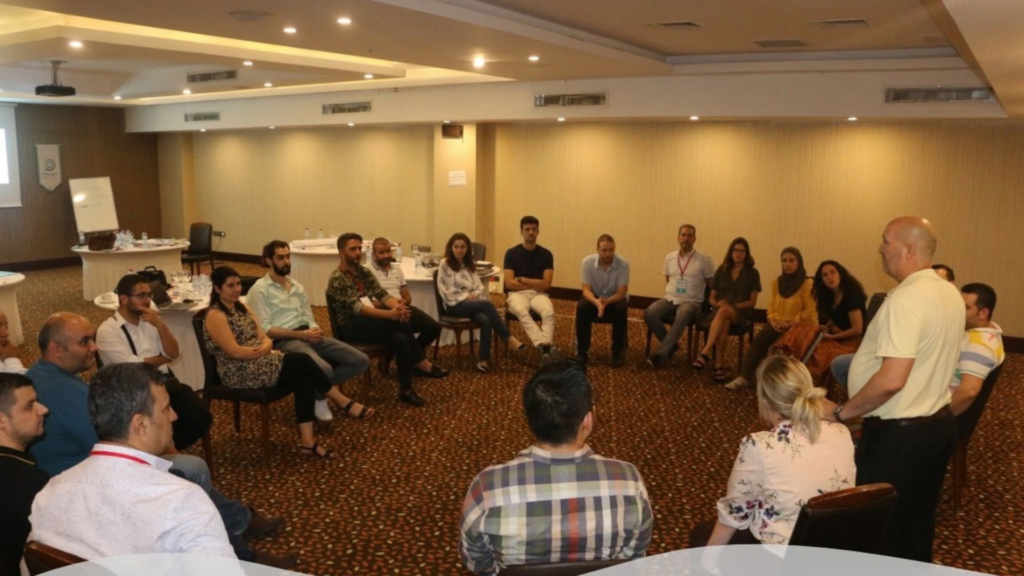
- Workshops and findings dissemination: Localization does not stop at data gathering. We actively include local partners—and, where possible, community members—when presenting findings and hosting workshops. This approach supports triangulation by validating insights across different perspectives and allows diverse stakeholders to engage directly with one another. It promotes transparency, accountability, and collaboration, reinforcing the principle of shared ownership.
Insights from Our Work and Research
In 2024, TRUST hosted a webinar on Localization and Accountability to Affected Populations (AAP), which explored practical approaches to embedding these principles in humanitarian and development projects. The webinar drew on a research project conducted in collaboration with four master’s graduates from the London School of Economics (LSE), focusing on the perspectives of local actors across four regions in the Global South. The research examined how local and national actors contribute to the implementation of strategies such as the Humanitarian-Development-Peace (HDP) Nexus, Localization, and AAP, highlighting both successes and persistent challenges.
You can watch the webinar here. We also welcome inquiries for tailored webinars or practical sessions, where we share examples from our projects and lessons learned on operationalizing localization in complex contexts.
Conclusion
Localization is not a one-off task but a continuous commitment. By integrating local perspectives throughout project design, data collection, and dissemination, organizations can foster trust, accountability, and sustainable outcomes. At TRUST Consultancy & Development, we are proud to champion this approach, ensuring that the voices of those most affected by crises are not only heard but actively shape the solutions that impact their lives. We also invite others to reflect on their own practices—what more can be done to advance meaningful localization?
